English| EUR
Suggested for you
More currencies
Choose a language
Six breweries hold the Munich beer crown, and between them they pour one style more than any other. This what is the most popular beer in munich guide explains which glass dominates the tables at Platzl 9, how it came to define the city, and what to do with that knowledge once you are standing at the bar.
Quick answer
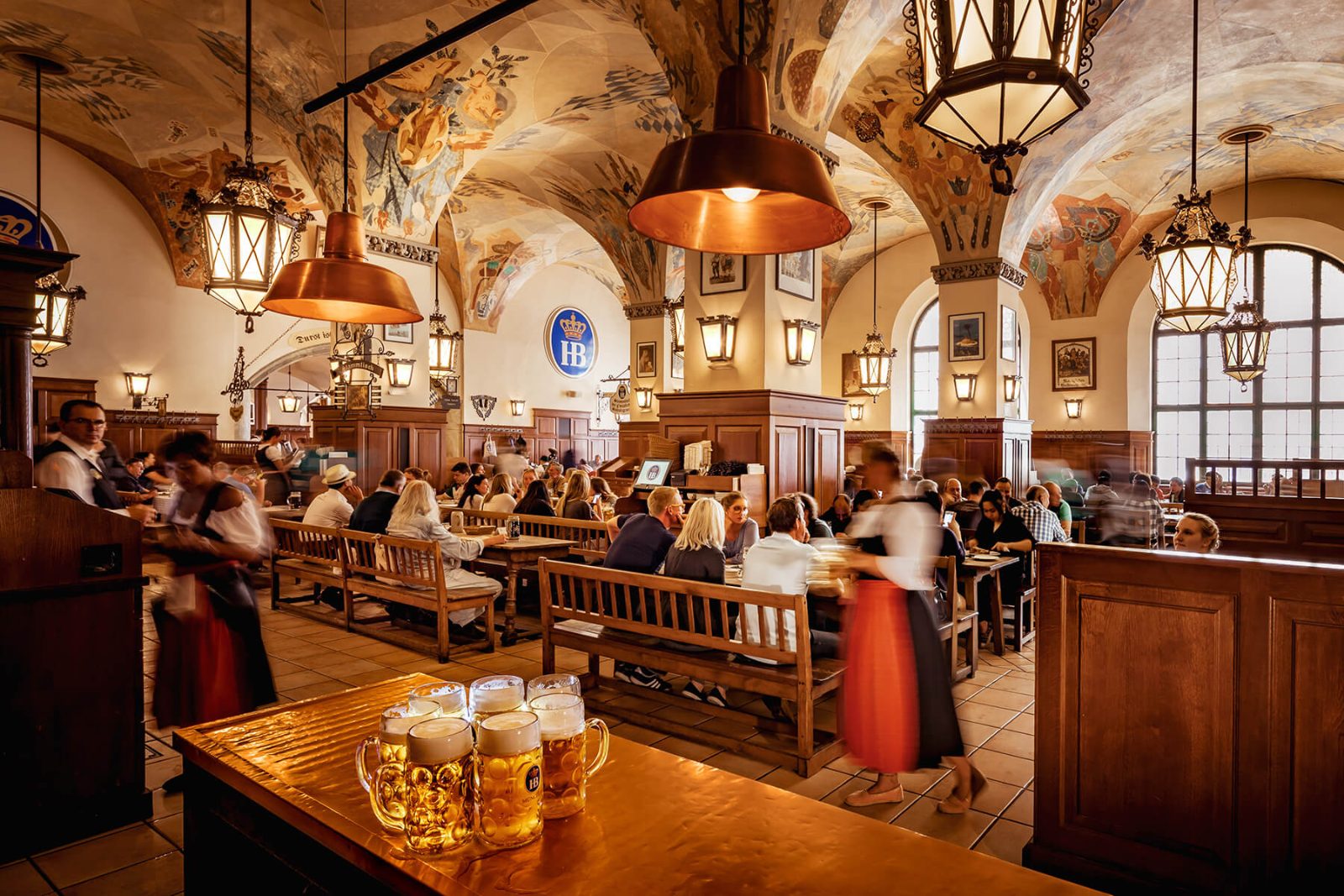
Helles — a pale, malt-forward lager — is the most popular beer in Munich, outselling every other style in the city's halls and gardens. It is typically served in a one-litre Maß at the Hofbräuhaus, Platzl 9, 80331 München, where entry costs 0 EUR (free entry) and doors are open 11:00–00:00 daily. Wheat beer and seasonal Märzen follow behind.
Munich's signature pale lager is younger than the hall that made it famous. Spaten brewed the first Helles in 1894, more than three centuries after the Hofbräuhaus was founded in 1589 — meaning the room at Platzl 9 poured dark Dunkel for generations before the golden glass arrived. Anyone asking what is the most popular beer in munich is really asking about a relative newcomer that displaced an older favourite within a single lifetime. The reason is partly technical, partly cultural. Bavarian brewers had spent centuries constrained by the Reinheitsgebot, the 1516 purity decree limiting ingredients to barley, hops, water and later yeast. When Bohemian pale-malting techniques crossed the border, Munich's brewers applied them within those limits and produced something soft, bready and low in bitterness — a beer built for volume rather than for sipping. That suited the Maß, the litre stein that remains the default measure in the city's halls and in the Hofbräuhaus courtyard beneath the vaulted ceiling. Six breweries — Augustiner, Hofbräu, Löwenbräu, Paulaner, Spaten and Hacker-Pschorr — still hold the right to pour at Oktoberfest, and Helles anchors the everyday lineup at all of them. For a visitor, the practical value of the answer is ordering confidence. Walk into any Munich beer hall, say "ein Helles, bitte", and the exchange ends there; no menu study required. Most Munich brewery tours and beer-hall walks build their tastings around the same style precisely because it is the local baseline, the reference point against which Weissbier, Dunkel and the autumn Festbier are measured. The Hofbräuhaus itself charges nothing at the door — entry is 0 EUR — so the beer is the only cost, and the brass band on the ground floor comes free with it. Knowing what is the most popular beer in munich also reframes the rest of a trip. It explains why beer gardens run on shaded chestnut trees and shared benches, why Stammtisch tables are reserved for regulars, and why the city's brewing calendar still turns on Lent and harvest. The full context on styles, timing and getting to Platzl 9 sits in the sections below.
“Munich's most popular beer is younger than the hall that made it famous.”
While Munich beer culture is deeply rooted in tradition, defining a single most popular beer depends on whether one considers daily consumption or festival volume. Local preference is generally divided among the city's historic breweries and their signature styles.
Helles is the daily staple
Oktoberfest beer has specific requirements
Beer gardens serve liters
Augustiner is a local favorite
Export beer popularity varies
Visitors in Munich frequently weigh the choice between Helles, the city's staple pale lager, and Weissbier, the traditional Bavarian wheat beer. Both represent fundamental aspects of local beer culture and are widely available throughout the city.
| Helles Pale Lager Recommended | Weissbier Wheat Beer | |
|---|---|---|
| Brewing Style | Bottom-fermented lager | Top-fermented wheat beer |
| Flavor Profile | Mild, malty, balanced | Fruity, spicy, clove-like |
| Serving Vessel | Glass mug (Maß) or Willibecher | Tall, slender vase-shaped glass |
| Primary Consumption Time | All-day standard | Typically consumed mornings or afternoons |
Verdict: Choose Helles for a crisp, sessionable standard lager, or opt for Weissbier if you prefer a more complex, aromatic profile traditionally associated with Bavarian breakfast culture.
The Hofbräuhaus operates on a consistent daily schedule, welcoming visitors to sample Munich's most iconic beer throughout the week. The establishment maintains these hours year-round for all guests.
To experience the most popular beer in Munich without excessive wait times, the best arrival window is 11:00–16:00. Arriving during this period allows visitors to avoid peak evening crowds and secure a table more easily.
—
Visit during these hours to enjoy a more relaxed environment and find seating without difficulty.
Pleasant 18°C to 23°C
The weather is generally mild, allowing for comfortable visits to outdoor beer garden spaces.
Cooler 10°C to 16°C
While these months host the most famous beer events, venues become extremely busy and require careful planning.
Verdict: The best time to visit is Tuesday to Thursday, arriving within the 11:00–16:00 window, during the months of May, June, or October.
The Hofbräuhaus is located at Platzl 9, 80331 München, situated in the heart of Munich's old town. It is most easily accessed by public transport via the central Marienplatz transit hub.
U-Bahn lines U3 or U6 to Marienplatz
S-Bahn lines S1 through S8 to Marienplatz
Walk east from Marienplatz via Orlandostraße
Drop-off at Platzl or Orlandostraße
To ensure a smooth experience, the best arrival window is 11:00–16:00 to avoid peak evening crowds and secure a table more easily.
Everything you need to know about what is the most popular beer in munich
The most popular beer in munich is typically Helles, a pale lager characterized by its crisp, malty profile. Many locals consider this light, golden beverage the essential choice when asking what is the most popular beer in munich. Residents often enjoy this style in large steins known as Mass. Many travelers wonder what is the most popular beer in munich because of the city's deep brewing heritage. The Helles style serves as the benchmark for quality in local establishments.
While Helles is the most popular, Weissbier, a wheat beer, is a close competitor in terms of regional appreciation. Each brewery crafts its own take on these classic styles, which are staples of every authentic munich beer tour. These styles are central to the cultural identity of Bavaria. Understanding the nuances between these beers enhances any visit to a traditional hall.
There is an entrance fee of 0 EUR, meaning entry is completely free for all guests. You are welcome to walk in and find a seat at your convenience. This accessibility makes it easy to experience a historic Munich landmark without worrying about upfront ticket costs.
To ensure a comfortable experience, the best arrival window is 11:00–16:00. Arriving during this period helps you avoid peak evening crowds and makes it easier to secure a table. This strategy allows you to enjoy your experience at a more relaxed pace.
Yes, children are welcome in these traditional environments, as they are family-friendly social hubs. Visitors often include these locations in a broader exploration of Munich landmarks. Please keep in mind that the halls can become loud and busy during peak hours.
A well-planned munich beer tour typically includes stops at iconic sites like the Hofbräuhaus at Platzl 9. You can easily integrate these visits into your sightseeing, as many sites are located in the historic center. Focusing on established breweries ensures you experience the most authentic local atmosphere.
The establishment is open daily from 11:00–00:00, including weekends. This consistent schedule allows for flexibility when planning your itinerary. You can verify details or reach out via phone at +4989290136100.
Munich Bike & Beer Garden Tours
Read more Tickets & toursMunich Beer Hall Putsch Tour
Read more GuideMunich Beer Guide: Where to Drink
Read more GuideMunich Beer FAQs and Prices
Read more Tickets & toursMunich Brewery Tours
Read more Tickets & toursMunich Beer Tasting Tours
Read more Tickets & toursMunich Beer Hall Tours
Read more