
English| EUR
Suggested for you
More currencies
Choose a language
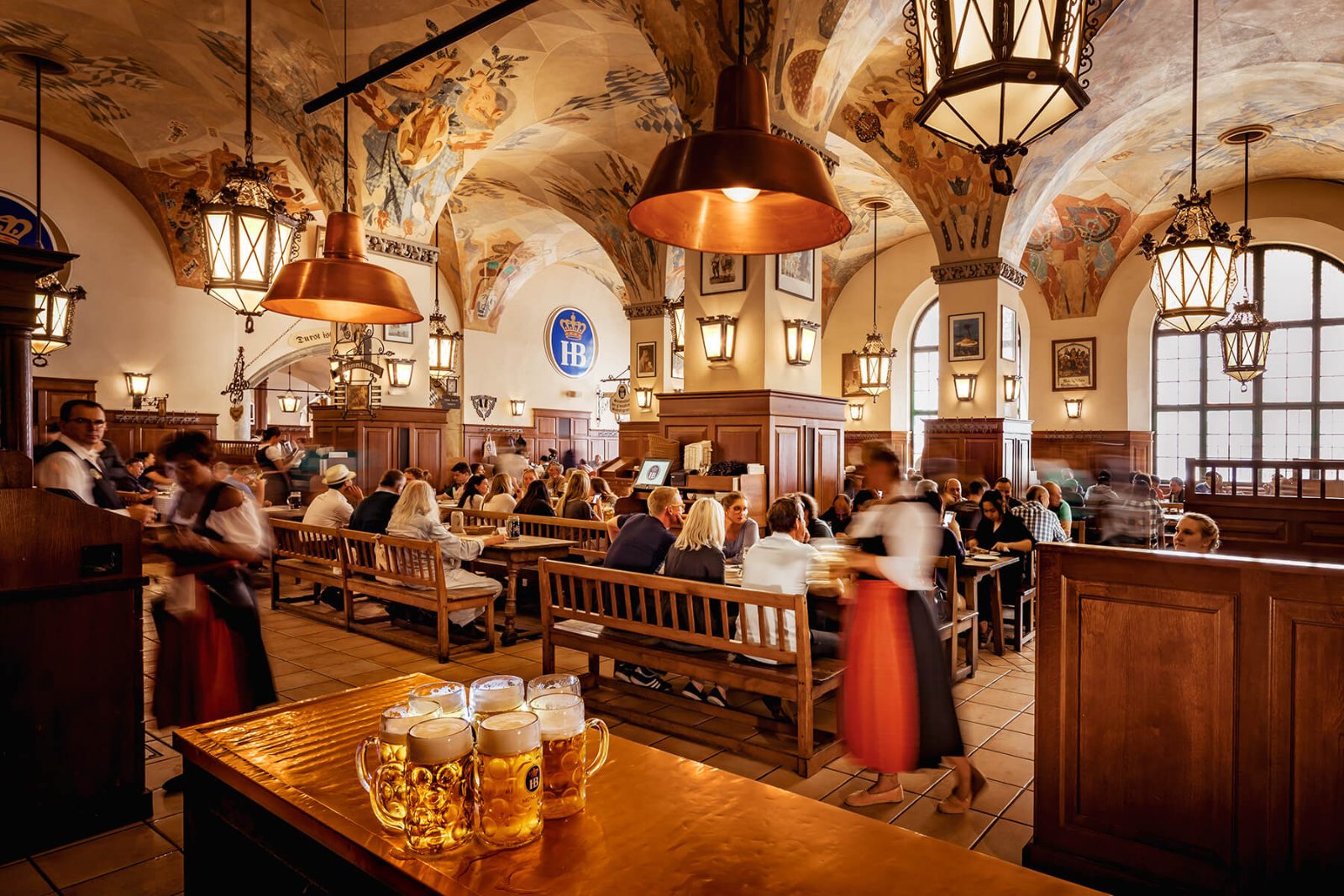
Munich's drinking culture splits into three rooms: the vaulted halls, the chestnut-shaded gardens, and the quieter neighbourhood taprooms. Knowing which one suits your afternoon matters more than knowing a beer list. This where to drink beer in munich guide sets out the categories, the hours pattern and the timing that decides whether you sit or stand.
Quick answer
Arrive between 11:00 and 17:00 to avoid peak evening crowds and secure a seat in the main hall more easily. Gardens and smaller taprooms follow their own, shorter seasonal patterns.
Bavaria's Reinheitsgebot, the purity decree issued in 1516, still shapes what lands on the table here: barley, hops, water and yeast, and little else. That continuity explains why the question of where to drink beer in munich has less to do with hunting rare labels than with choosing a room. The city's brewing houses were built as civic infrastructure, not as attractions, and the difference shows in the furniture — long communal benches, wooden tables scrubbed pale, and a service rhythm that assumes you will stay for hours. The categories are worth learning before arriving. The Bierhalle, or beer hall, is an indoor vaulted room with brass bands, litre Maß steins and a Schwemme — the standing-room hall where locals traditionally drank without ordering food. The Biergarten is its warm-weather counterpart, laid out under chestnut trees planted centuries ago to keep cellars cool; Bavarian law still permits guests to bring their own food to many of them, though never their own drink. Then there are the Kellers, the terraced hillside gardens above old lagering vaults, and the neighbourhood Wirtshaus, quieter and more likely to have a Stammtisch — the regulars' table, marked by a plaque, that visitors should leave alone. Radler, Helles, Dunkles and Weissbier appear on nearly every list; the seasonal Märzen surfaces later in the year. Geography does much of the work. The Englischer Garten stretches north with its Chinesischer Turm garden at the centre; Viktualienmarkt keeps a garden that rotates its tap between the city's major breweries. Anyone comparing Munich landmarks will find these clustered tightly enough to cover on foot in a single afternoon. Use that compactness deliberately. A sensible plan for where to drink beer in munich pairs one historic hall early in the day, when the main room still has open benches, with a garden later, when the light drops through the chestnuts and the crowd thickens. Summer 2026 has been warm, and the gardens fill first on clear evenings. Reserve nothing you do not need to, order in halves if you plan to walk afterwards, and treat the Maß as a two-hour commitment rather than a round. The Munich beer tour that works is the unhurried one.
“The question has less to do with hunting rare labels than with choosing a room.”
To experience Munich's beer culture without the stress of capacity limits, the optimal strategy is to visit during the shoulder seasons and adhere to specific daily arrival windows. Aiming for the morning hours allows you to secure a seat in the main hall before the heavy demand of the evening.
—
Arrive between 11:00–17:00 to avoid peak evening congestion and easily find seating.
Mild and pleasant, 15°C–22°C
Early summer offers ideal conditions for enjoying beer gardens before the peak tourist rush.
Cooler, 10°C–18°C
While Oktoberfest brings significant density, visiting during these months provides the most authentic seasonal atmosphere.
Verdict: The best time to visit is Tuesday to Thursday between 11:00–17:00 during the months of May, June, or October.
Access to historic beer halls in Munich typically involves no cost for entry. Visitors are free to enter and find a seat without purchasing a ticket.
Munich beer halls run on shared tables and unwritten rules that regulars follow closely, and visitors who ignore them stand out quickly.
Everything you need to know about where to drink beer in munich
To discover the finest traditional Munich beer culture, consider joining a guided brewery tour that explores the local landscape of taverns and cellars. These tours often provide historical context to your search for where to drink beer in munich.
Yes, families are generally welcome in traditional beer halls, which serve as community gathering spaces. It is a common part of local life to see families enjoying food and non-alcoholic beverages alongside the famous Maß beer.
Munich offers many outdoor beer gardens which are perfect during the summer season. These open-air venues are integral to the local culture and provide a refreshing way to experience the city's brewing heritage.
Munich Bike & Beer Garden Tours
Read more Tickets & toursMunich Beer Hall Putsch Tour
Read more GuideMunich Beer FAQs and Prices
Read more GuideMost Popular Beers in Munich
Read more Tickets & toursMunich Brewery Tours
Read more Tickets & toursMunich Beer Tasting Tours
Read more Tickets & toursMunich Beer Hall Tours
Read more